
The short answer
For most Palo Alto homes, the right AC installation starts with a load calculation, not a match to the old unit's size, because areas near the Bay run cooler than the rest of the valley. If your gas furnace is aging, a heat pump that handles both cooling and heating is worth comparing to a standard central AC.
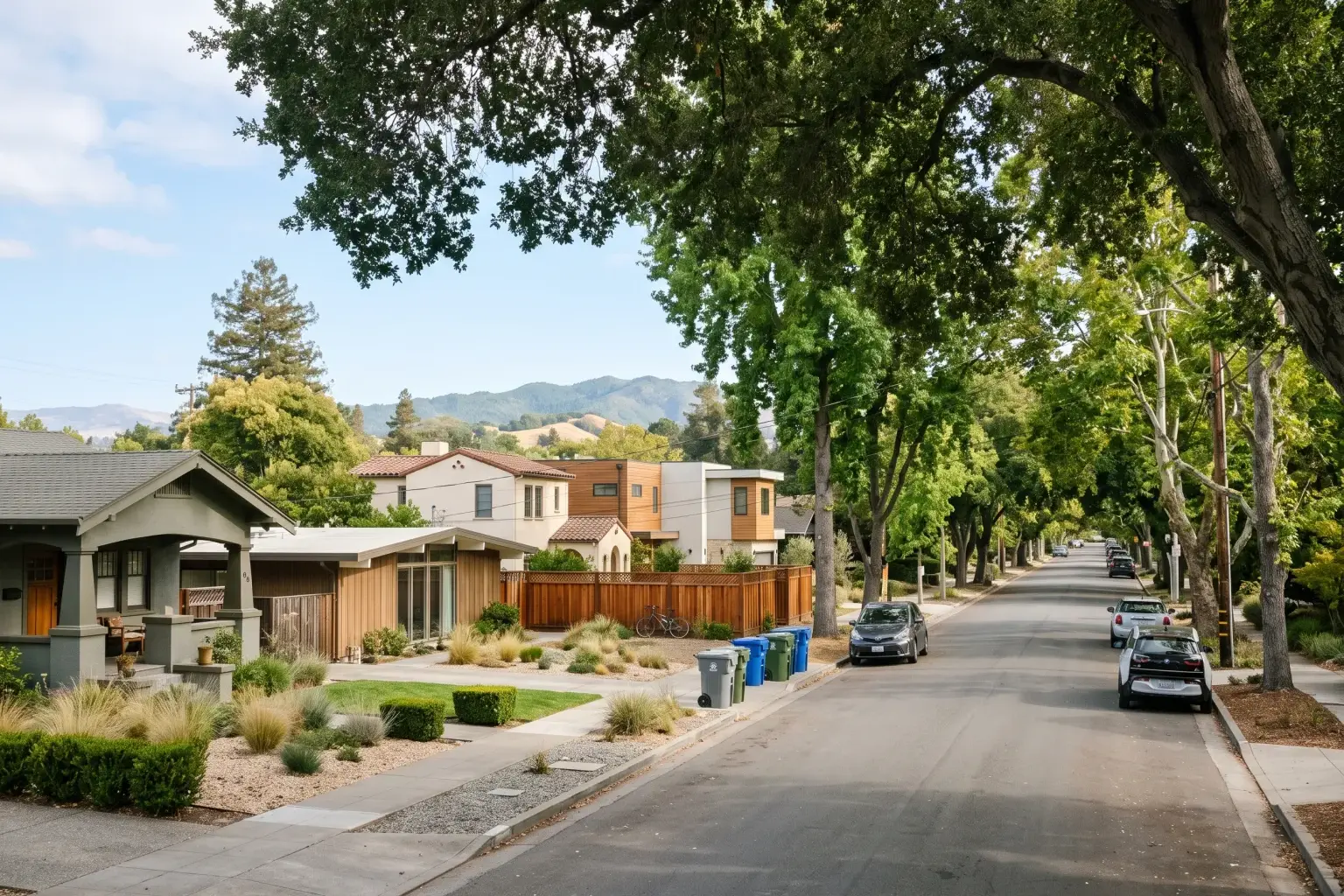
Adding or replacing air conditioning in a Palo Alto home is less about raw cooling power and more about fit. The system should be the right size for your house and should work with your existing ductwork, or skip ducts entirely. It should also make sense under current Bay Area appliance rules. ArcticFlow AC Repair is based in Santa Clara, about 9 miles from Palo Alto, and we install cooling systems for homes in ZIP codes 94301, 94303, 94304, and 94306. Here's how we approach an installation and what to consider before you choose a system.
Sizing a System for Palo Alto's Climate
The Santa Clara Valley has a Mediterranean climate with dry summers and mild, damp winters. Areas closer to the Bay tend to stay cooler in summer than inland and southern parts of the valley. As a result, a Palo Alto home often needs less cooling capacity than an identical house farther south. That makes oversizing a real risk. An oversized system cools the air quickly, shuts off, and starts again. That cycling wears on the equipment and leaves rooms feeling uneven.
We don't just match the tonnage on your old unit. We do a load calculation for your house that looks at square footage, insulation, window area and orientation, ceiling height, and how you use each space. Upstairs bedrooms, rooms with large west-facing windows, and converted garages or additions often need separate attention.
Placement of the outdoor unit matters too. On tighter lots, we look at the distance to property lines, bedroom windows, and neighbors so the outdoor unit doesn't become a nuisance.
Central AC, Heat Pump, or Ductless?
Most Palo Alto homeowners we talk to are choosing between three options:
Given the mild winters here, a heat pump deserves a serious look for many homes. It handles the cool, damp months without a separate gas appliance, and you maintain one system instead of two.
- Central air conditioner: pairs with an existing gas furnace and ductwork. It's a straightforward choice if your furnace is in good shape and your ducts are sound.
- Ducted heat pump: one outdoor unit that cools in summer and heats in winter through the same ducts. It can replace both the AC and the furnace.
- Ductless mini-split: individual indoor units for homes without ducts, for additions, or for a few rooms that never stay comfortable.
What Bay Area Air Rules Mean for Your Decision
Under Bay Area Air District Rule 9-4, natural gas furnaces manufactured from 2029 must meet a zero-NOx emission standard. In practice, that points homeowners toward heat pumps when they replace a furnace after that date. If your furnace is aging, installing a heat pump now could mean one project instead of replacing the AC today and the furnace a few years later.
These rules don't require you to replace working equipment. They apply only when an existing furnace or water heater fails or is replaced. If your furnace has plenty of life left, a new central AC can be a reasonable choice, and we'll walk through both paths with you.
If you're also thinking about your water heater, check the current rule first. The zero-NOx date for small water heaters under Rule 9-6 was set for 2027, and the Air District Board has been considering amendments that could delay it.
Incentives: What's Available Now
The federal Energy Efficient Home Improvement Credit (25C) covered qualifying heat pumps placed in service before December 31, 2025. It isn't available for new installations after that date, so don't count on it for a system installed now.
Bay Area homeowners can check BayREN and their local clean energy provider for current heat pump and electrification incentives. Amounts and availability change with each funding cycle, so we confirm the current offer before including it in a quote.
What an Installation Looks Like
A typical installation follows these steps:
Older homes sometimes need electrical panel upgrades or duct repairs before a new system will work well. We point those out during the home visit so there are no surprises on installation day.
Besides Palo Alto, we install systems in Los Altos Hills, Los Altos, Mountain View, Sunnyvale, and Cupertino.
- A home visit to check your electrical panel, ductwork, existing equipment, and possible outdoor unit locations
- A load calculation and a written recommendation with options
- Removal of old equipment and recovery of its refrigerant
- Installation of the indoor and outdoor units, refrigerant lines, condensate drain, and thermostat
- Startup, airflow and refrigerant checks, and a walkthrough of how to run the system
More services in Palo Alto
- AC Repair in Palo Alto
- Heating Repair in Palo Alto
- Heat Pump Installation in Palo Alto
- Furnace Repair in Palo Alto