
The short answer
You likely need duct cleaning if you see dust blowing from vents, smell mustiness when the system runs, find signs of pests, or recently remodeled. We inspect the full duct system first, then recommend cleaning, sealing, repair, or replacement based on what we find, with a written estimate before any work starts.
Your ducts carry all the heated and cooled air in your home. When they collect dust, debris, or pests, or start leaking into the attic or crawlspace, you notice it in comfort, air quality, and how hard your system works. ArcticFlow AC Repair cleans and inspects duct systems for homeowners in Santa Clara, San Jose, Sunnyvale, Cupertino, and nearby cities. We start by looking at what's actually inside your ducts and how they're holding up. Then we tell you plainly whether cleaning, sealing, repair, or replacement makes sense, or whether you don't need any work at all.
Signs Your Ducts Need Cleaning
Duct cleaning isn't something every home needs on a fixed schedule. In a sealed system with a well-fitted filter, ducts can stay reasonably clean for a long time. But certain situations and symptoms are worth a closer look:
In the Santa Clara Valley, dry summers move a lot of fine dust through homes, and mild, damp winters can lead to condensation in attics and crawlspaces where ducts often run. If the signs above match what you're seeing, an inspection is a reasonable next step.
- Visible dust or debris blowing out of supply vents when the system starts
- Dust settling on furniture and surfaces soon after you clean, especially near vents
- A musty, stale, or burnt smell when the heat or AC turns on
- Signs of rodents or insects, such as droppings, nesting material, or scratching sounds in the ductwork
- Recent remodeling, drywall work, or sanding done while the system was running
- Visible mold on duct connections, the air handler, or around the cooling coil
- Moving into a home where you don't know when the ducts were last inspected
What We Check During an Inspection
Cleaning only helps if we understand the whole system. Before we clean anything, we look at the parts that affect how air moves through your home and what that air carries with it.
Where it's useful, we use a camera to see inside duct runs we can't reach by hand. We show you what we find so you can see the condition for yourself instead of taking our word for it.
- Supply and return vents and grilles
- The return air path and filter slot, including how well the filter fits and whether air is bypassing it
- Main trunk lines and branch runs we can access in the attic, crawlspace, or basement
- Flexible duct for kinks, crushed sections, sagging, or torn outer jackets
- Joints and connections for gaps, failed tape, or runs that have come apart
- Insulation on ducts that pass through unconditioned spaces
- The blower, coil area, and drain pan for dirt buildup or standing moisture
- Evidence of pests, water damage, or mold
Cleaning, Repair, or Replacement
Not every duct problem is solved by cleaning. Based on the inspection, we walk you through the options that fit your system and explain why we're recommending one over another.
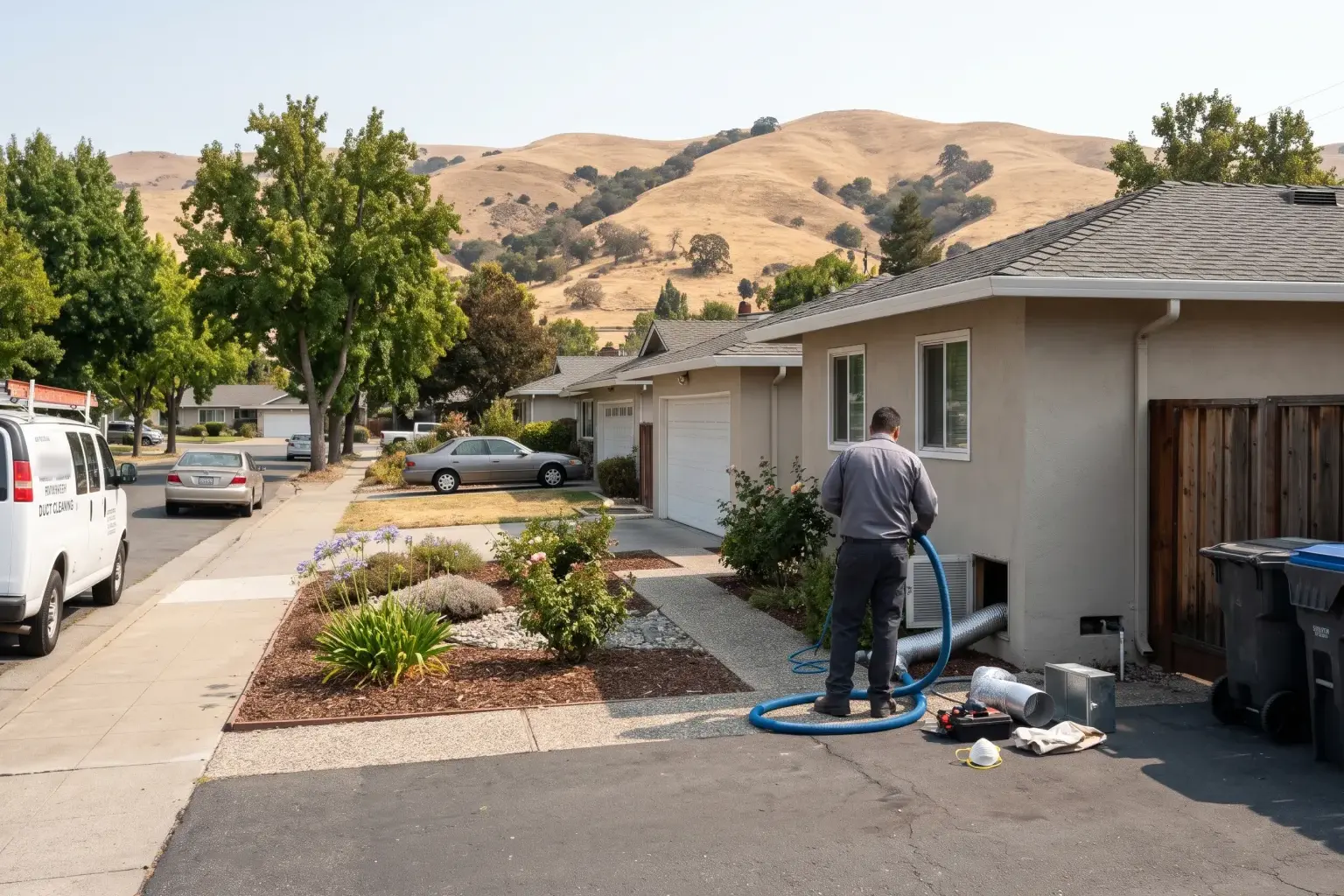
Cleaning makes sense when the ducts are structurally sound but hold dust, debris, or construction residue. We use negative-pressure equipment to pull debris out of the system while loosening buildup from the duct surfaces, and we clean the vents, grilles, and accessible parts of the air handler.
Repair and sealing fit when the ducts are mostly in good shape but have leaks, disconnected sections, crushed runs, or missing insulation. Leaky ducts in an attic or crawlspace can pull in dust and insulation fibers and lose conditioned air before it reaches your rooms. Sealing joints and reconnecting runs often does more for comfort than cleaning alone.
Replacement is worth considering when flex duct has become brittle or torn, when pests have damaged or heavily contaminated large sections, or when the layout no longer suits the home after a remodel. If you're thinking about a heat pump, it's a good time to check whether your ducts are sized and laid out well for it. Bay Area Air District furnace rules apply only when a furnace fails or is replaced, not to working equipment, so there's no need to rush. But if a system replacement is on your horizon, evaluating the ducts at the same time can save a second round of work.
What Affects the Cost of Duct Cleaning
We don't quote a price before we know what we're working with, because duct jobs vary a lot from home to home. These are the main factors:
After the inspection, we give you a written estimate that spells out what's included, so you can decide before any work begins.
- The size of the home and the number of supply and return vents
- How many heating and cooling systems the home has
- How easy the ducts are to reach, since tight attics, low crawlspaces, and ducts inside walls take more time
- How much buildup is in the ducts, and whether pest debris or mold is involved
- Whether sealing, repairs, or new insulation are needed along with cleaning
- The type of ductwork, since sheet metal, duct board, and flex duct are handled differently
- Whether some sections should be replaced rather than cleaned
How a Duct Cleaning Visit Works
We keep the process straightforward so you know what to expect from start to finish.
Most homes stay livable while we work. If the system needs to be off for part of the day, we'll tell you ahead of time so you can plan around it.
- Scheduling: Tell us what you've noticed, such as dust, odors, or pest activity, so we come prepared.
- Inspection: We check the vents, duct runs, filter setup, and air handler, and show you what we find.
- Recommendation: We explain whether cleaning, sealing, repair, or replacement makes sense, and give you a written estimate.
- Preparation: We protect floors and furniture near our work areas and cover vents to keep debris contained.
- The work: We clean, seal, or repair the system as agreed, working room by room and through the main lines.
- Wrap-up: We walk you through what we did, install a fresh filter if needed, and share simple steps to keep the ducts cleaner going forward.